How propaganda rargets young people in Belarus — study

What is propaganda trying to instill in young people? / Euroradio/OpenAI
Belarusian state propaganda treats young people not only as an audience to “educate,” but also as a future political, economic and demographic resource. A study by Piotr Paparatnikau for Euroradio analyzed 20 official propaganda guidelines prepared for the “Unified Information Day” campaign between September 2024 and April 2026.
The analysis found that propaganda is built around a simple message: the state provides opportunities, therefore young people owe loyalty in return. Education, healthcare, housing support and jobs are presented as gifts from the state, while participation in elections, support for the authorities, work and military readiness are framed as obligations.
Another major theme is fear. State materials repeatedly argue that stability, peace and sovereignty depend on a “correct political choice,” strong leadership and distrust of outside influence. Elections are described as “historic” moments, while NATO, the West and “foreign values” are portrayed as threats to Belarusian society.
The study highlights several propaganda techniques used in the materials. The most common is the use of statistics and “fact blocks” meant to create an impression of objectivity and proof. The guidelines frequently cite numbers on schools, roads, families, salaries or state spending to support political conclusions. Researchers argue that these figures are often selective and presented without broader context.
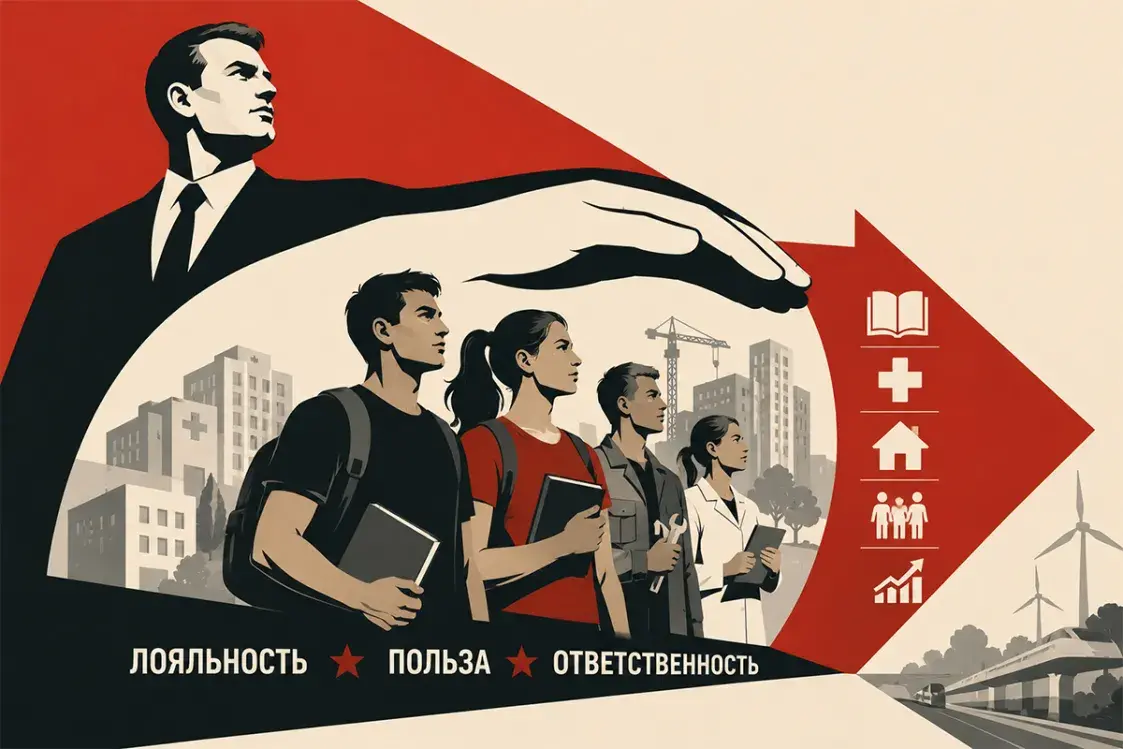
Another technique is emotional pressure through fear, guilt and duty. Young people are told that the state has invested in them, so they must “repay” it through loyalty and participation. Historical trauma, war memories and external threats are also used to justify unity around the current political system.
The materials also heavily rely on personalization of the state through Aliaksandr Lukashenka. His quotes are used as final proof that the government’s course is correct. Long lists of achievements, benefits and infrastructure projects are repeated throughout the texts to create a cumulative effect of success and stability.
Researchers note that propaganda partly matches the real concerns of young Belarusians — money, housing, career opportunities, health and stability. But instead of offering opportunities, propaganda often reframes these needs into political loyalty and obligation.
Sociological data cited in the study suggests limited trust in state institutions and media among young people. Researchers conclude that fear-based messaging may increase withdrawal into private life rather than political mobilization.
The full version can be read via Google Translate here.