What is happening to Evangelical churches in Belarus?

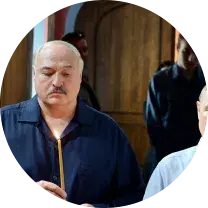
Participants of the “Festival of Hope” in Minsk, May 17, 2026. / Franklin Graham / Facebook
The large-scale “Festival of Hope,” held under the patronage of influential American pastor Franklin Graham, became the most high-profile religious event in Belarus in a long time.
The event drew attention to the condition of Belarusian Protestant communities, which in recent years have suffered repression from the regime. In particular, the churches “New Life” and “John the Baptist.”
Euroradio looked into how they are doing now.
The church now operates underground
The most publicly visible confrontation was between the Belarusian authorities and evangelical Protestants from the “New Life” church, which had up to 2,000 parishioners.
They spoke out against violence in 2020, after which security forces began gradually increasing pressure on them in early 2021. The church building in Sukharava — purchased by believers with their own money and converted from a barn — was first seized and later completely taken away.
When parishioners began praying in a nearby parking lot, they were fined for “participation in an unauthorized gathering.” Pastor Vyachaslau Hancharenka was repeatedly arrested in the autumn of 2022 and the summer of 2023, and the anti-organized crime unit GUBAZiK conducted a search of his home.
In the second half of 2023, the church building was completely demolished with bulldozers, and the legal entity was liquidated through the Supreme Court.
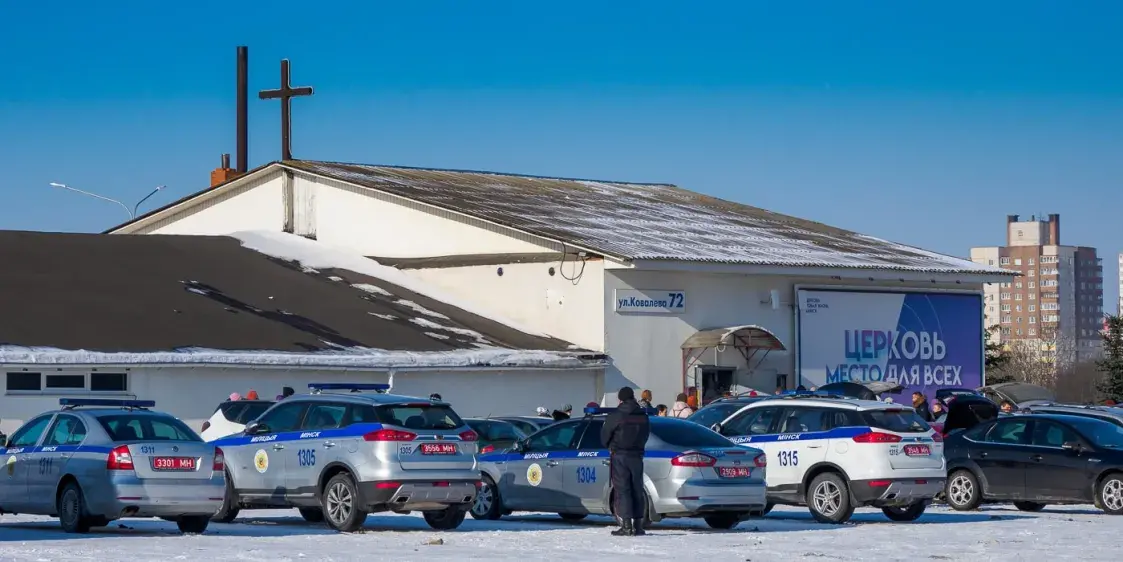
Euroradio was unable to speak with any current members of the “New Life” (“Novae Zhyccio”) church — people either remain silent or refuse to comment for security reasons.
Nevertheless, believers familiar with the church’s situation told Euroradio that the church is currently operating underground. Most parishioners have either emigrated from the country or dispersed among other Protestant congregations. Those who remain gather in rented premises — houses or private homes — and no longer have a permanent building for worship.
Members of “New Life” also did not take an active role in organizing the “Festival of Hope,” likely because of Franklin Graham’s loyal stance toward the Alexander Lukashenko regime, for whom he suggested praying during the festival.
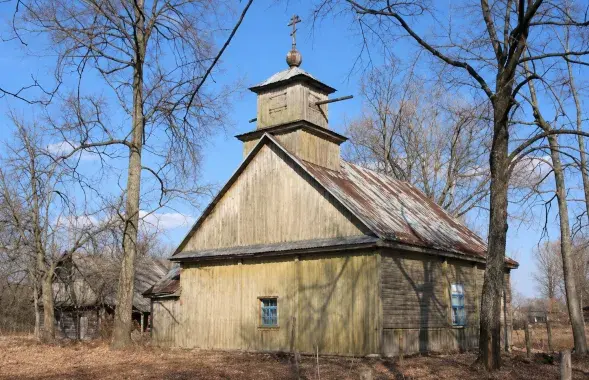
The building is marked as closed on Yandex Maps
After 2020, events unfolded in a similarly dramatic way for the church of “John the Baptist” (“Jan Pradvesnik”).
Since 1999, the church had conducted its activities in the Belarusian language, promoting trust in the Protestant faith through a cultural dimension.
Security forces focused their pressure on the church’s pastor, Antoniy Bokun — a historian, publisher, and translator of the Bible into Belarusian. He was repeatedly arrested and fined during the summer and autumn of 2022.
After strict amendments were introduced to the law “On Freedom of Conscience and Religious Organizations,” the church was unable to complete re-registration. Officials from the Minsk City Executive Committee’s department for ideological work refused to comment to Euroradio on whether “John the Baptist” (“Jan Pradvesnik”) still exists as a legal entity.
“I can’t tell you that — check the list of registered religious organizations on our website yourself,” journalist was told by Katsiaryna Kaveryna, deputy head of the department for coordination of ideological work and religious affairs of the Minsk City Executive Committee.
Support independent Belarusian journalism. We work every day to provide Belarusians with truthful and independent reporting, but many of our readers inside Belarus cannot support us because of ongoing repression. You can help by making a donation on Patreon.

Naturally, “John the Baptist” (“Jan Pradvesnik”) was not included on the list, just like the “New Life” (“Novae Zhyccio”) church.
The building of the “John the Baptist” church, located in Minsk at 11 3rd Zaharadny Lane, is marked as closed on Yandex Maps. The phone number previously associated with the legal entity “John the Baptist” is now answered by members of another Protestant congregation — the “Gethsemane” (“Gifsemanii”) church.
Believers who still attend the church refused to speak with Euroradio, even anonymously.
Receiving carte blanche and continuing as before
In a conversation with Euroradio, human rights advocate and theologian Natalia Vasilevich noted that after the events of 2020, the lives of Protestant communities changed dramatically under the influence of several negative factors.
First, the communities were severely affected by the mass migration of working-age and young people, which destroyed the churches’ familiar structure. Second, the wave of repression that began after 2020 and intensified after 2022 because of believers’ support for Ukraine and Ukrainian refugees led to the persecution of pastors and the liquidation of a number of churches.
At the same time, Belarusian Protestants found themselves internationally isolated. Cooperation with European and American organizations became impossible, leading to the shutdown of humanitarian projects.
Contacts with Ukrainian churches were cut off because of security risks, while relations with Russian churches deteriorated due to the principled disagreement of many Belarusian believers with Russian Protestant leaders’ support for the war.
An important aspect became the “invisibility” of the repression.
“The churches are in such a vulnerable position that they often choose not even to report persecution… They fear that any publication could trigger cascading repression,” Natalia says.
The enactment of amendments to the law “On Freedom of Conscience and Religious Organizations” became another instrument of pressure. Natalia Vasilevich emphasizes that in Belarus, religious activity without registration is criminalized, which in itself violates believers’ rights.
Because of this, around 80 Protestant communities ceased to exist.

“Although some communities disappeared naturally — because of migration from villages to cities or abroad — repression played a key role in this process. At the same time, large Protestant communities founded by Belarusians who left the country have begun to emerge abroad.”
Speaking about the religious “Festival of Hope” held in Minsk with the participation of American pastor Franklin Graham, Natalia Vasilevich noted the ambiguous nature of the event.
The very fact that a religious festival considered ordinary by European standards is perceived in Belarus as something miraculous demonstrates how repression has become normalized in the country.
Permission for the event was granted at the highest political level — something virtually unheard of in democratic states.
Because of this, opinions within the Protestant community became divided.
Supporters of the festival considered it a success that around 1,500 people declared their return to Christianity. For them, this justified any political gestures the organizers made toward the authorities.
Critics, however, are convinced that the price of this “miracle” was too high. According to Natalia Vasilevich, many viewed Graham’s remarks about Alexander Lukashenko as dishonest and crossing a red line.
Visits to Belarus by John Cole, who is regarded as a Protestant lobbyist, and the activities of Franklin Graham will not, in Vasilevich’s view, lead to systemic improvements for Protestant churches in Belarus.
“Lukashenko got everything he wanted from him [Franklin Graham]… He effectively imposed a prayer for Lukashenko on the entire Protestant community, making everyone stand up and pray,” the expert says.
She is convinced that the situation will return to its previous repressive course, because for the regime any point of freedom is a point of tension. The symbolic loyalty demonstrated by Protestants during the “Festival of Hope” will not change state policy — for Lukashenko, it simply means “receiving carte blanche and continuing to do what he has been doing all along.”
/ automated translation